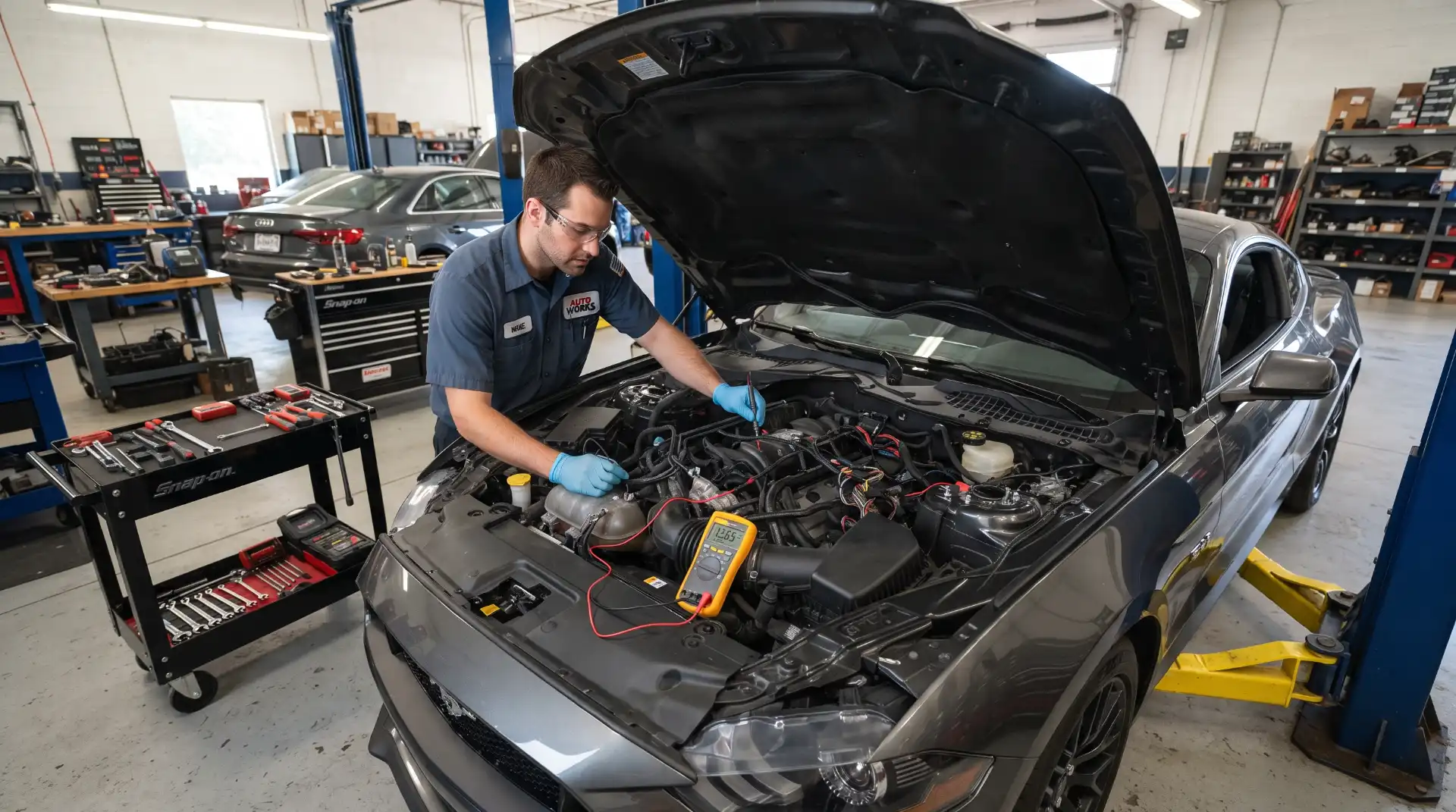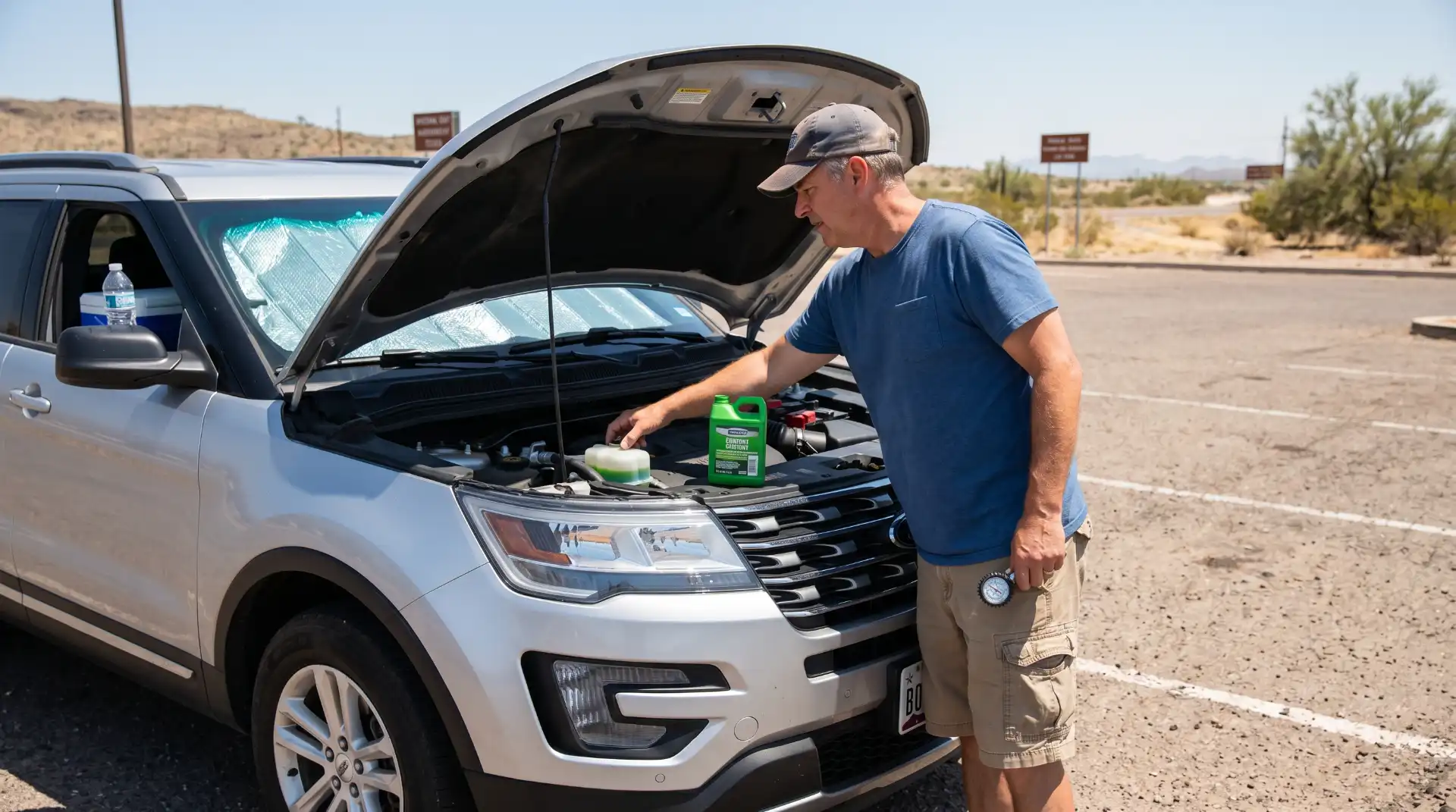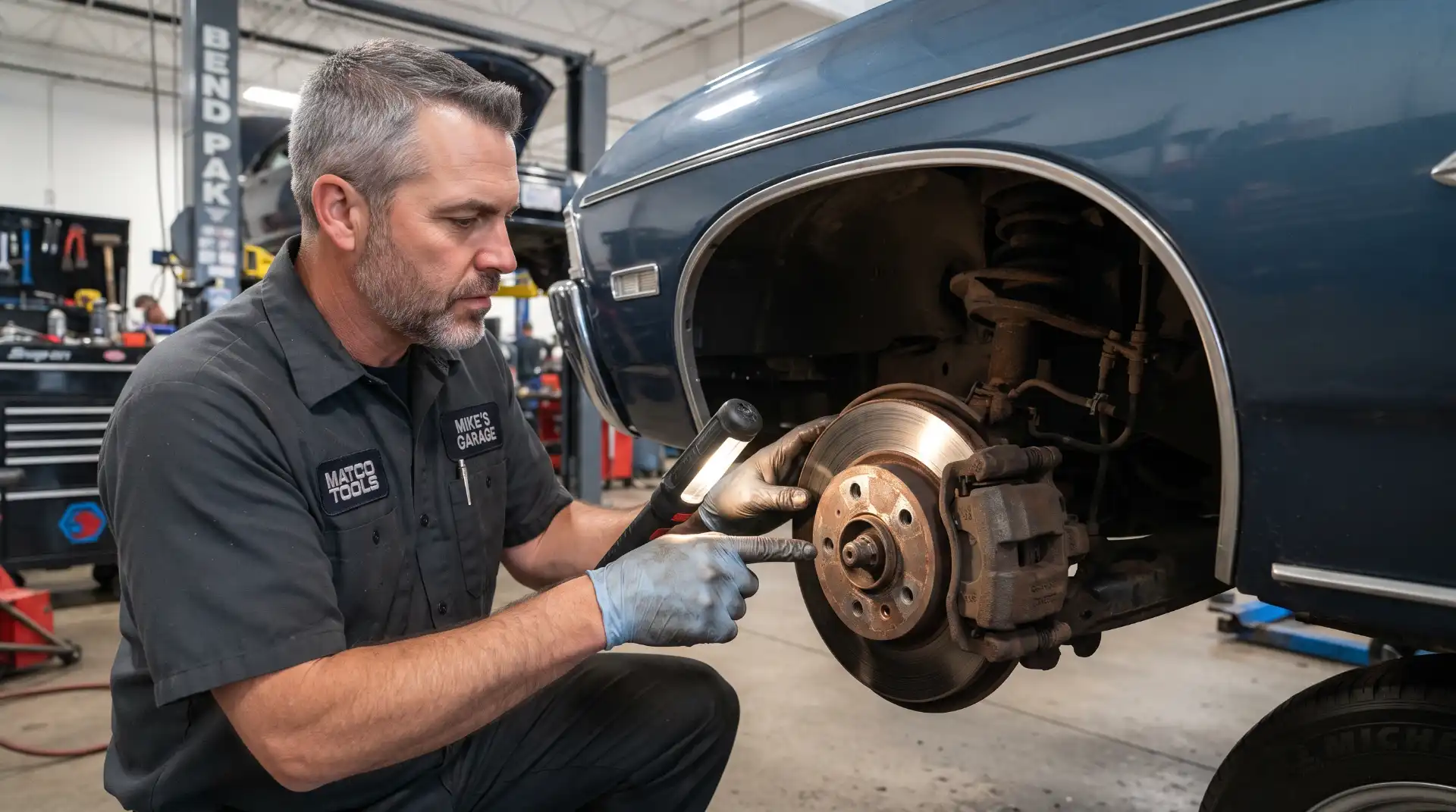
Keeping an older vehicle on the road in 2026 requires more than simply changing the oil when the dashboard reminder appears. As cars age, components that were reliable when the vehicle was new can gradually wear out, deteriorate from time, or become less effective.
For millions of Americans, maintaining an older vehicle can make practical financial sense. A paid-off vehicle with a known maintenance history may continue serving its owner for many years, provided critical systems receive appropriate care. However, older cars also require a more comprehensive approach to maintenance.
The right maintenance plan depends on the vehicle’s age, mileage, manufacturer recommendations, driving conditions, and previous service history. A 12-year-old car with 90,000 miles may need very different attention from a 15-year-old vehicle with 180,000 miles.
AAA notes that many maintenance requirements are based on time or mileage rather than dashboard reminders, including items such as brake fluid, coolant and timing belts. AAA also reports that the average age of vehicles on the road is about 12 years, making maintenance of older vehicles increasingly relevant to American drivers.
This guide explains the essential car maintenance services older vehicle owners should understand in 2026.
Why Older Vehicles Need More Preventive Maintenance
Every vehicle experiences normal wear as it accumulates miles. Rubber components can deteriorate, fluids can age, seals can develop leaks, electrical connections can corrode, and moving components can gradually lose their effectiveness.
Age itself can also become a maintenance factor.
A vehicle that is driven only a few thousand miles per year is not automatically maintenance-free. Tires, belts, hoses, fluids and batteries can deteriorate based on time as well as mileage.
This is why older vehicles should be maintained using both mileage-based and time-based schedules.
Instead of waiting for a noticeable failure, owners should pay attention to maintenance intervals and warning signs. Catching a small problem early may help prevent it from becoming a larger repair.
Your vehicle’s owner’s manual should remain the primary reference for the exact service intervals recommended by the manufacturer.
For additional information, CarrSS already has a useful resource covering how to prevent common auto repairs with proactive maintenance.
Regular Oil and Filter Changes
Engine oil remains one of the most important maintenance items for gasoline-powered vehicles.
Oil lubricates internal engine components, helps control heat and carries contaminants toward the oil filter. As oil ages, its ability to perform these functions can change.
Older engines may also consume oil between services because of wear, leaks or other mechanical conditions. That makes checking the oil level particularly important.
However, there is no universal mileage interval that applies to every vehicle. Modern engines, oil formulations and driving conditions vary considerably.
The safest approach is to follow the vehicle manufacturer’s recommended oil type and service interval.
Drivers who frequently make short trips, operate vehicles in severe temperatures, tow heavy loads or spend considerable time in stop-and-go traffic may have different maintenance requirements than drivers who primarily travel on highways.
If an older vehicle has an existing oil leak or consumes oil between changes, simply adding oil does not fix the underlying problem. The cause should be investigated by a qualified technician.
You can also read CarrSS’s existing guide, The Importance of Routine Oil Changes for Vehicle Health, for additional information about engine oil maintenance.
Brake Inspection and Service
Brake maintenance becomes increasingly important as vehicles accumulate mileage.
Brake pads and shoes wear through normal use. Rotors and drums can also develop wear or surface problems. Brake hardware, hoses and other components can deteriorate with age.
Older vehicles should receive regular brake inspections even when the brakes appear to be working normally.
Drivers should pay attention to changes such as:
- Grinding or squealing noises
- Brake pedal vibration
- Pulling while braking
- A soft or unusually low pedal
- Longer stopping distances
- Brake warning lights
Not every brake noise means the same thing, so professional inspection is important.
Brake fluid should also be checked according to the manufacturer’s recommendations and the vehicle’s condition. If fluid is leaking or contaminated, the underlying issue should be addressed rather than simply topping off the reservoir.
For an older vehicle, a brake inspection is particularly useful when buying a used car, preparing for a long road trip or noticing a change in braking behavior.
Tire Maintenance and Replacement
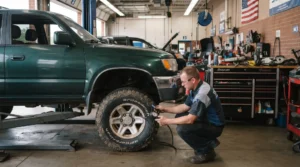
Tires deserve special attention on older vehicles because they are affected by both mileage and age.
NHTSA recommends checking tire pressure regularly and inspecting tires for damage, tread wear and other problems. The agency says tires should be replaced when tread reaches the applicable minimum of 2/32 of an inch and notes that some manufacturers recommend replacing tires based on age even when tread remains.
Tire pressure should be checked when the tires are cold. The recommended pressure is normally listed on the vehicle’s door-jamb label or in the owner’s manual, rather than on the tire’s maximum-pressure marking.
Older vehicles should also be checked for uneven tread wear.
Uneven wear may indicate problems involving alignment, suspension components, tire inflation or wheel balance.
Drivers should inspect sidewalls for cuts, cracks, bulges and other visible damage. A tire that looks acceptable from a distance may still require professional evaluation.
NHTSA also recommends checking the spare tire because spare tires can age while sitting unused.
For American drivers who frequently travel long distances, tire condition should be checked before major road trips.
Battery and Charging System Checks
A vehicle’s battery does more than start the engine.
Modern vehicles rely on electrical systems for lighting, climate controls, infotainment, safety equipment, sensors and numerous electronic modules.
As a battery ages, its ability to hold a charge can decline. Extreme temperatures can also place additional stress on batteries.
Older vehicles should therefore receive periodic battery and charging-system checks.
A technician can evaluate the battery’s condition and inspect the terminals and charging system.
Signs that may warrant an inspection include slow engine cranking, dimming lights, electrical glitches or repeated starting problems.
Battery maintenance is particularly important before winter in colder parts of the United States. In warmer regions, high temperatures can also accelerate battery deterioration.
If a vehicle repeatedly requires a jump-start, the battery should not simply be replaced without checking the charging system and determining why the battery lost its charge.
Cooling System and Coolant Service
The cooling system helps control engine temperature, making it especially important for older vehicles.
The system includes components such as the radiator, coolant, hoses, thermostat, water pump and related components.
As a vehicle ages, hoses can become brittle and connections can develop leaks. Coolant can also deteriorate or become contaminated.
AAA explains that coolant can lose some of its corrosion-protection capability over time and recommends following vehicle-specific requirements rather than automatically performing a flush without determining whether it is needed.
An overheating engine can suffer serious damage, so warning signs should never be ignored.
Drivers should pay attention to rising temperature gauges, coolant warning lights, visible coolant leaks, unusual smells or repeated coolant loss.
The correct coolant type and service interval vary by vehicle. Owners should consult the manufacturer’s specifications before adding or replacing coolant.
Transmission Maintenance
Transmission problems can become expensive, particularly when an older vehicle has accumulated substantial mileage.
Transmission maintenance varies considerably between vehicles. Some manufacturers specify fluid replacement intervals, while others use different service procedures.
Driving conditions can also influence transmission wear.
AAA notes that older vehicles and vehicles subjected to demanding conditions may require transmission-fluid service at intervals different from those used for ordinary driving.
Warning signs can include delayed engagement, slipping, harsh shifting, unusual noises or fluid leaks.
A transmission service should not automatically be performed simply because a vehicle has reached a particular mileage. The owner’s manual, maintenance history and vehicle condition should all be considered.
If a vehicle has no documented maintenance history, a technician may need to inspect the transmission before recommending a service.
Timing Belt and Serpentine Belt Inspection
Belts are easy to overlook because they are generally hidden under the hood.
Yet a failed belt can leave an older vehicle disabled and, depending on the component involved, potentially cause significant mechanical damage.
Timing belts are particularly important on vehicles that use them. Replacement intervals vary by manufacturer and engine. AAA notes that timing-belt replacement commonly falls within a broad mileage range, but recommends following the vehicle manufacturer’s specific schedule.
Serpentine belts operate accessories such as the alternator and air-conditioning system on many vehicles.
During maintenance, technicians can inspect belts for cracking, fraying, glazing or other signs of deterioration.
If a timing-belt replacement is due, owners should not rely on visual inspection alone. Timing belts can fail without providing much warning.
Suspension and Steering Inspection
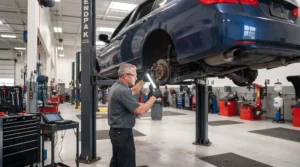
Suspension and steering components experience substantial stress over the life of a vehicle.
Older cars may eventually need attention to shocks, struts, control arms, bushings, ball joints, tie rods or related components.
Common signs of suspension or steering problems include excessive bouncing, unusual clunking sounds, uneven tire wear, steering-wheel vibration or changes in handling.
These components also influence tire wear and vehicle control.
A suspension inspection can therefore identify problems that may not be obvious during normal driving.
This is especially relevant for vehicles frequently driven on rough roads, over potholes or on poorly maintained streets.
Air and Cabin Filters
Air filters are relatively inexpensive maintenance items, but they should not be ignored.
The engine air filter helps prevent dirt and debris from entering the engine’s intake system. A heavily restricted filter can affect airflow and vehicle operation.
The cabin air filter, meanwhile, helps filter air entering the passenger compartment.
Replacement intervals vary by vehicle and driving conditions. Cars driven in dusty environments may require more frequent attention.
When servicing an older vehicle, technicians can inspect both filters and replace them when appropriate.
This is also a maintenance task that many owners may be able to handle themselves if the vehicle’s design allows straightforward access and the correct replacement parts are used.
Spark Plugs and Ignition Components
For gasoline-powered vehicles, spark plugs are another important maintenance item.
Spark plugs ignite the air-fuel mixture inside the engine. Over time, they can wear and become less effective.
Depending on the vehicle, ignition maintenance may involve spark plugs, ignition coils and related components.
Potential signs of ignition problems include rough idling, hesitation, difficulty starting, reduced performance or an illuminated check-engine light.
Spark-plug replacement should follow the manufacturer’s recommended interval rather than an arbitrary mileage number.
For high-mileage vehicles, reviewing the service history can help determine whether scheduled ignition maintenance has already been completed.
Check for Fluid Leaks
Older vehicles are more likely to develop leaks simply because seals, gaskets and hoses have been exposed to years of heat and use.
Drivers should periodically look underneath the vehicle for unexplained fluid spots.
Different fluids can have different colors and characteristics, but identifying a leak based only on appearance can be difficult.
Common sources can include engine oil, coolant, transmission fluid, brake fluid and other vehicle-specific fluids.
A leak should be investigated rather than repeatedly topped off.
A small leak may eventually become a significant mechanical problem if the vehicle loses enough fluid.
Inspect Lights, Wipers and Visibility Equipment
Maintenance is not limited to the engine and drivetrain.
Older vehicles should also receive regular checks of headlights, brake lights, turn signals, reverse lights and hazard lights.
Windshield wipers deserve attention as well.
Worn blades can reduce visibility during rain, particularly during heavy storms and highway driving.
Windshield washer fluid should also be maintained, and the washer system should function properly.
For drivers in regions with harsh winters, visibility maintenance becomes particularly important because road spray, snow and ice can quickly reduce visibility.
Check Safety Recalls
An older vehicle can still have an outstanding safety recall.
NHTSA provides a VIN-based recall search that allows vehicle owners to check for unrepaired safety recalls. The agency recommends checking recall information regularly.
This is especially useful when purchasing a used vehicle.
A recall repair can address a safety defect identified by the manufacturer or NHTSA, and recall remedies are generally provided without charge by the manufacturer when applicable.
Vehicle owners can use the official NHTSA recall database to check their VIN.
Checking recalls should be part of ownership rather than something reserved for buying or selling a vehicle.
Keep a Detailed Maintenance Record
Maintenance records become increasingly valuable as a vehicle ages.
A simple record can include the date, mileage, service performed, parts replaced and the name of the repair facility.
This history can help owners understand what has already been completed and what may be coming due.
It can also be useful when diagnosing recurring problems.
For example, if a vehicle has already received a new battery, timing belt, tires or major brake work, having those dates available prevents unnecessary guesswork.
Maintenance documentation can also help demonstrate that a vehicle has been cared for when it is eventually sold.
How Often Should an Older Car Be Serviced?
There is no single maintenance schedule for every older vehicle.
A 2008 pickup truck, a 2015 sedan and a 2011 SUV may have completely different service requirements.
Mileage is only one part of the equation.
Owners should consider:
Vehicle age: Rubber, fluids and other components can deteriorate with time.
Mileage: Higher mileage generally means more wear on mechanical components.
Driving conditions: Stop-and-go traffic, towing, short trips, extreme temperatures and rough roads can affect maintenance needs.
Service history: A vehicle with complete records is easier to maintain than one with an unknown history.
Manufacturer recommendations: The owner’s manual should be the starting point for service intervals.
AAA recommends using maintenance schedules based on both vehicle age and mileage rather than relying exclusively on dashboard reminders.
Older Car Maintenance vs. Repairing Only When Something Breaks
Waiting until something fails may appear less expensive in the short term, but it can create unexpected problems.
Preventive maintenance is about identifying wear before it becomes a breakdown.
For example, replacing a worn belt according to the manufacturer’s schedule is different from waiting for the belt to fail. Replacing worn tires before they become unsafe is different from continuing to drive until a tire suffers a serious failure.
That does not mean every recommended service should automatically be performed.
Vehicle owners should ask what the service is intended to accomplish, whether it is required by the manufacturer, whether the vehicle shows signs of a problem and what could happen if the work is delayed.
AAA’s 2026 guidance on transmission, coolant and brake-fluid services similarly emphasizes determining whether additional services are actually appropriate for the vehicle rather than automatically performing every flush or replacement.
When Should You Take an Older Car to a Mechanic?
Some problems should receive prompt professional attention.
A check-engine light, overheating, brake problems, significant fluid leaks, steering problems or major changes in vehicle behavior should not be ignored.
Unusual noises can also provide valuable clues.
A mechanic can use diagnostic equipment and physical inspections to determine whether a symptom is caused by a relatively simple issue or a more significant mechanical problem.
For older vehicles, establishing a relationship with a qualified repair facility can make maintenance easier because technicians can become familiar with the vehicle’s service history and recurring issues.
Should You Keep Maintaining an Older Vehicle?
The answer depends on the vehicle’s condition, repair history, reliability, safety, operating costs and the owner’s circumstances.
Age alone does not determine whether a vehicle is worth maintaining.
An older vehicle with a strong maintenance history may continue providing dependable transportation. On the other hand, a vehicle with extensive corrosion, repeated major failures or significant safety problems may require a more detailed evaluation.
Owners should consider the overall condition rather than focusing on a single repair bill.
A $500 maintenance service does not necessarily mean a vehicle is becoming uneconomical to own. Similarly, repeatedly paying for major repairs without addressing underlying problems can become increasingly difficult to justify.
The best way to evaluate the situation is to understand the vehicle’s current condition, expected maintenance needs and likely repair requirements.
A Practical 2026 Maintenance Plan for Older Vehicles
A simple maintenance routine can help older-car owners stay organized.
Each month, check tire pressure, tire condition, fluid levels, exterior lights and visible signs of leaks. These checks do not necessarily require a repair shop.
At the manufacturer’s recommended intervals, have the vehicle serviced for oil and filter replacement, tire rotation when applicable, brake inspection and other scheduled maintenance.
At higher mileage or when recommended by the manufacturer, review timing belts, transmission service, coolant, spark plugs, filters, suspension components and other major maintenance items.
Before a long road trip, inspect tires, brakes, fluids, battery condition, lights, wipers and emergency equipment.
And throughout the year, keep maintenance records and check for outstanding recalls.
Final Thoughts on Car Maintenance in 2026
Older vehicles can continue to serve American drivers for many years when maintenance is approached proactively.
The most important strategy is not simply spending more money on maintenance. It is understanding what the vehicle actually needs and performing the right services at the appropriate time.
Oil and filter changes, brake inspections, tire care, battery testing, cooling-system maintenance, transmission service, belt inspections, suspension checks and fluid inspections can all play an important role in keeping an older vehicle operating properly.
At the same time, not every vehicle requires every service at the same interval. Manufacturer recommendations, mileage, age, driving conditions and service history should guide maintenance decisions.
For 2026, one of the most useful habits for older-car owners is to stop thinking about maintenance only when something breaks. Regular inspections and accurate records can help identify developing problems before they become unexpected roadside breakdowns.
If you want to continue learning about vehicle care, explore CarrSS resources such as How to Prevent Common Auto Repairs and The Ultimate Guide to Comprehensive Auto Repair.
For official U.S. vehicle-safety information, drivers can also consult the National Highway Traffic Safety Administration’s resources on tire safety and vehicle recalls.
A well-maintained older vehicle is not simply a car that has avoided major repairs. It is a vehicle whose owner understands its maintenance history, watches for changes and addresses appropriate service needs before small issues have the opportunity to become bigger ones.