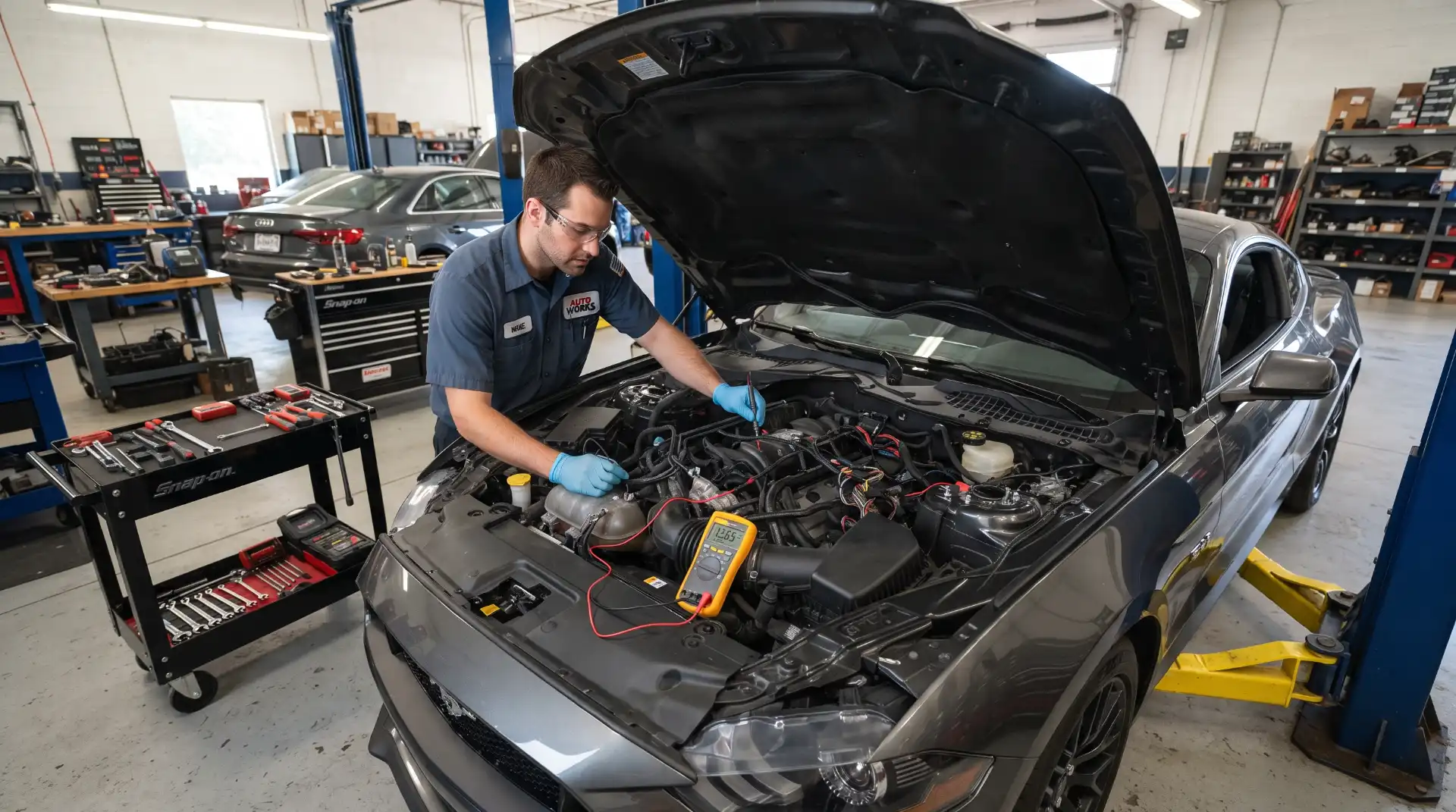
Expensive electronic car problems do not always mean you need a new vehicle. In many cases, repair still makes sense. The better choice depends on repair cost, vehicle age, safety, reliability, warranty coverage, and the car’s current market value. A smart decision comes from looking at the full picture, not just one repair bill.
Modern vehicles depend on electronics more than ever. A car now uses computers to manage the engine, transmission, safety systems, steering assistance, braking support, climate control, lighting, cameras, sensors, and infotainment. This technology improves comfort and safety, but it also creates a new kind of ownership problem. When electronics fail, the repair process can become expensive, confusing, and time-consuming.
Many drivers feel stuck after hearing an estimate for a bad control module, failed touchscreen, wiring issue, camera fault, or sensor malfunction. The repair shop may quote hundreds or even thousands of dollars. That often leads to one big question: should you repair the car or replace it?
The answer depends on several practical factors. If the vehicle is still in good shape overall, a repair may be the better value. If the car has repeated failures, poor reliability, or a low market value, replacement may make more sense. This guide explains how to weigh the cost, risk, and long-term value of each option.
Why Electronic Problems Feel More Expensive Than Traditional Repairs
Drivers are often more comfortable with mechanical repairs. Brake pads, tires, belts, batteries, and filters feel familiar. You can often predict the need for those parts, and many shops can fix them quickly. Electronic failures are different. They often need advanced diagnostics, software updates, module programming, and manufacturer-specific tools.
That added complexity raises the cost. The expensive part may not even be the physical component itself. A large share of the bill may come from diagnostic labor, programming time, calibration, and testing. On newer vehicles, one failed system may also affect several others. A sensor fault can trigger warning lights across the dashboard. A damaged wiring harness can create a chain reaction of electrical symptoms.
Electronics also tend to fail in less obvious ways. A car may start and drive, yet still have problems with adaptive cruise control, blind spot monitoring, parking sensors, climate control, keyless entry, or the infotainment display. Some of those issues are minor annoyances. Others affect safety, drivability, or legal compliance.
That is why the first step is not panic. The first step is understanding what kind of electronic problem you actually have.
Common Expensive Electronic Problems in Modern Cars
Not all electronic issues carry the same weight. Some are relatively manageable. Others can point to deeper problems. Expensive issues often involve the car’s control systems, wiring, or integrated safety features.
Examples include failed engine control modules, body control modules, transmission control modules, instrument clusters, touchscreens, digital gauge panels, wiring harness damage, sensor network failures, battery management systems, camera systems, radar units, and ADAS calibration problems. Hybrid and electric vehicles can also have expensive issues tied to high-voltage systems, inverters, and cooling controls.
A failing infotainment unit may cost a lot, but it does not always mean the car should be replaced. A failing ABS control module or electronic steering component deserves more concern because it may affect safety. A car with one isolated module failure is very different from a car with multiple recurring electronic faults spread across several systems.
The distinction matters. You should not judge every electronic repair the same way.
When Repairing the Car Often Makes Sense
Repairing a car with electronic problems often makes sense when the vehicle is still valuable, the issue is well-defined, and the rest of the car remains dependable. If the car has a good engine, a solid transmission, clean bodywork, and a strong maintenance history, one major repair may still be cheaper than replacing the vehicle.
A newer vehicle is a strong candidate for repair. If your car is only a few years old, its remaining life may still be substantial. Replacing it means taking on a larger financial burden, which may include a down payment, registration fees, taxes, higher insurance costs, and a new loan. In that case, a repair bill that feels painful today may still be the lower-cost option over the next few years.
Repair also makes sense when the problem has a clear solution. For example, if the shop confirms that one control module failed and the rest of the vehicle tests well, that is easier to justify than chasing an unresolved electrical problem with no firm answer. A precise diagnosis lowers your risk. It tells you what you are paying for and what result you can reasonably expect.
Another reason to repair is warranty coverage. Some electronic repairs may be covered by the factory warranty, extended warranty, certified pre-owned warranty, emissions warranty, or a recall campaign. Before making a major decision, check for open recalls through the National Highway Traffic Safety Administration recall database. A known defect may reduce or eliminate your out-of-pocket cost.
Repair also tends to make more sense when the car fits your needs well. If you know its history, maintain it properly, and trust the vehicle apart from this issue, keeping it may be the smarter move. Replacing a familiar car with an unknown used car can sometimes trade one problem for another.

When Replacing the Car May Be the Better Choice
Replacement may be the better choice when the electronic issue is only one part of a larger pattern. If the car also has mechanical wear, rust, suspension issues, transmission concerns, or repeated warning lights, the repair may only buy time. In that situation, spending thousands on electronics may not improve long-term reliability enough to justify the cost.
Age matters too. An older vehicle with low market value can quickly become a poor repair candidate. If the repair cost approaches a large share of the car’s actual value, many owners begin to lose the financial argument for keeping it. That does not mean you need a strict rule for every car, but it does mean you should compare the bill to what the car is realistically worth in your local market.
Replacement also makes sense when the electronic issue remains unresolved after multiple shop visits. Intermittent electrical problems can become some of the most frustrating issues a driver faces. If the shop cannot confirm the failure, if parts are backordered for months, or if repairs keep returning, the downtime and uncertainty may outweigh the benefit of keeping the car.
Safety is another deciding factor. If the problem affects braking support, steering assistance, lighting, airbags, visibility systems, or driver assistance features, you need a higher standard. A vehicle with ongoing safety-related electronic faults may not be worth keeping unless the issue can be repaired correctly and confidently.
Finally, replacement may be the practical option if your lifestyle depends on reliability. For drivers who commute long distances, use the car for work, or need dependable family transportation, recurring electrical problems can become too disruptive. Even if the car still runs, frequent breakdowns or warning lights can make it a poor daily vehicle.
How to Compare Repair Cost Against Vehicle Value
One of the most useful ways to think through this decision is by comparing the repair cost to the car’s current market value. This does not need to be a perfect formula, but it gives you a clear starting point.
If the repair estimate is modest compared to the vehicle’s value, repair often makes sense. If the estimate is high compared to the value, replacement becomes more attractive. Many drivers use a rough threshold of around 40 to 50 percent of the car’s value as a caution point. That is not a hard rule, but it helps frame the decision. A $2,000 repair on a $15,000 car feels very different from a $2,000 repair on a $4,500 car.
Still, value alone does not decide the issue. A well-kept older car with no payment may be worth repairing even if the percentage looks high. On the other hand, a newer car with a high value may still be a poor repair candidate if the issue signals repeated electronic instability. Numbers matter, but context matters too.
You should also compare repair cost against replacement cost, not just resale value. A used replacement car may cost much more than the repair. It may also need its own maintenance soon after purchase. That is why a smart comparison includes purchase price, taxes, fees, insurance, interest, and likely repairs on the replacement vehicle.
Questions to Ask Before You Decide
Before approving a major electronic repair, take a step back and ask a few practical questions.
First, what exactly failed? Ask the shop to explain the specific part or system involved. A clear diagnosis matters. “Electrical issue” is too vague. “Failed body control module with confirmed loss of communication” is more useful.
Second, what caused the failure? A failed module may be an isolated issue, or it may have been triggered by water intrusion, collision damage, rodent damage, voltage spikes, or wiring corrosion. Understanding the cause helps you judge whether more problems may follow.
Third, what happens if you do nothing? Some electronic problems affect convenience only. Others affect safety or drivability. You need to know the real consequence of delaying repair.
Fourth, how likely is the repair to solve the problem fully? If the shop sounds uncertain, ask more questions. A good shop should explain whether the repair is straightforward, likely, or still exploratory.
Fifth, are there used, remanufactured, or aftermarket options? In some cases, these may reduce cost. In other cases, especially with safety systems or programming-heavy modules, original equipment parts may be the smarter path.
Sixth, is the vehicle otherwise in good condition? Think about tires, brakes, suspension, rust, leaks, engine performance, and transmission health. You are not just deciding on one repair. You are deciding whether the whole car still deserves investment.
The Importance of a Second Opinion
Electronic problems can be difficult to diagnose. That is why a second opinion often helps, especially when the first estimate is very high. Another shop may confirm the diagnosis, suggest a less expensive repair path, or identify a different root cause.
Choose a shop with strong diagnostic capability. That may be a qualified independent specialist, a dealership, or a repair facility with factory-level scan tools. The cheapest quote is not always the best value in an electronic repair. An incorrect diagnosis can waste more money than a higher but accurate estimate.
You should ask for a written estimate and diagnostic findings. This gives you something concrete to compare. It also helps you make a less emotional decision.
How Warranties, Recalls, and Service Campaigns Can Change the Answer
Before replacing a car, check whether the issue may be covered. Factory warranties often cover electronics for a certain period. Extended warranties may also help, though coverage varies. Certified pre-owned vehicles may come with extra protection. Some states also have emissions-related warranties that cover specific components longer than owners expect.
Recalls and technical service bulletins deserve attention too. A recall can make the decision much easier because it shifts the cost. A technical service bulletin does not guarantee free repair, but it can confirm that the manufacturer already knows about a pattern.
If the car is relatively new and has had repeated issues, you may also want to review your state consumer protection options. Laws differ, so the details vary by state, but repeated repair attempts can matter when a defect remains unresolved.
Safety and Reliability Matter More Than Convenience Features
Not every expensive electronic issue deserves the same urgency. A dead seat memory function is annoying. A failing collision warning sensor or unstable electronic steering assist deserves immediate attention. When deciding whether to repair or replace, separate convenience from core safety.
If the issue affects basic reliability, that also changes the decision. A vehicle that leaves you stranded, drains the battery repeatedly, or enters limp mode without warning can stop being practical even if it still has market value. A car should not just function sometimes. It should function consistently.
That is why many drivers reach the replacement decision not because of one repair bill, but because they no longer trust the vehicle. Trust matters. If you constantly worry about the next warning light, the ownership experience changes.
Trade-In Value and Selling a Car With Electronic Problems
Some drivers choose to replace the car and trade it in as-is. That can be a practical route, especially if the repair cost is high and the vehicle no longer fits your budget. Just be realistic. A car with known electronic problems often brings a lower trade-in offer. Dealers factor the risk and repair cost into the price.
Private-party sale may bring more money, but you need to disclose known issues honestly. Some buyers are comfortable taking on a project car. Others are not. If the problem affects safety or drivability, expect fewer buyers and tougher price negotiations.
That is why fixing the issue before selling may sometimes improve your position. In other cases, the repair cost may be too high to justify. Run the numbers both ways. Compare the likely value after repair against the total cost of doing that repair.
A Simple Way to Make the Final Decision
If you are still unsure, use a practical decision approach.
Repair the car if the problem is clearly diagnosed, the vehicle is otherwise solid, the repair cost is manageable, and you expect several more dependable years of use.
Replace the car if the vehicle has repeated electrical issues, low market value, major safety concerns, or a high chance of more costly repairs soon.
In many cases, the best answer comes from combining five factors: repair cost, vehicle value, reliability history, safety impact, and replacement cost. If three or more of those factors lean negative, replacement often makes more sense. If most lean positive, repair often remains the better value.
Final Thoughts
Should you repair or replace a car with expensive electronic problems? There is no one-size-fits-all answer. A newer or otherwise dependable car often deserves repair, especially if the problem is isolated and the fix is clear. An older car with recurring faults, safety concerns, or low value may be a better candidate for replacement.
The key is to slow down and avoid making the choice based on frustration alone. Get a clear diagnosis. Compare the estimate to the car’s value and replacement cost. Check for warranty coverage and recalls. Think about reliability, safety, and how much confidence you still have in the vehicle.
If the repair restores a solid car to dependable service, keeping it may save you money. If the repair only delays a deeper pattern of problems, replacing the car may protect your time, budget, and peace of mind. The smartest move is the one that fits both the car’s condition and your real-world needs as a driver.
Suggested internal link placement: In the section on reliability, link the phrase “early warning signs” to your article about spotting early warning signs your car needs a repair. In the section on maintenance history, link “regular repairs and care” to your vehicle lifespan article. In the section on calibration and sensors, link “ADAS calibration” to your ADAS recalibration article. In the introduction or conclusion, link “common car repairs” to your article about understanding common car repairs.